DMC Production has unveiled AR 1 and AR 2, two identical, scalable software-defined remote production vehicles that reverse engineer traditional outside broadcasting. Working with Calrec and Grass Valley, DMC Production has developed a flexible workflow where all critical processing occurs at the venue, enabling efficient bandwidth usage and integrated audio management. By keeping raw feeds on-site and using a lightweight internet connection, these units can handle large multi-camera productions. Jens Envall, Chief Innovation Officer of DMC Production, emphasizes that this is the first step in establishing a scalable production model, stating, "The aim is not just to build one or two vehicles but to create a repeatable and scalable concept where software, IP connectivity, and professional broadcast control surfaces work together." The ecosystem includes Calrec's ImPulseV Virtualised Audio Mixing Engine and the 48-fader Argo M console, allowing for remote audio management with low latency. This innovative approach addresses the growing demand for flexible live productions in a variety of formats.
The broadcast industry is witnessing a shift towards more efficient and flexible remote production methods, driven by the need for bandwidth optimization and increased content diversity. DMC Production's recent unveiling of AR 1 and AR 2 - scalable software-defined remote production vehicles - marks a significant step in this evolution. By using Calrec's ImPulseV Virtualised Audio Mixing Engine and Grass Valley's AMPP environment, DMC is redefining the conventional workflow to keep critical processing at the venue, drastically reducing backhaul requirements. This approach allows for high-quality live productions over low-bandwidth connections, making it particularly attractive in remote or challenging broadcast environments. Jens Envall, Chief Innovation Officer of DMC Production, emphasizes that this isn't just about a one-off solution but part of a broader strategy to establish scalable and repeatable production concepts. "We are building a new workflow that requires close collaboration between engineering, product, and operational teams," he states. This collaborative approach is crucial as the industry evolves, with increasing demands for flexibility and efficiency in content delivery. Calrec Regional Sales Manager Anthony Harrison underscores DMC Production's innovative approach, describing it as highly adaptable and supportive of their scalable audio ecosystem. "This is not just a technology upgrade but a foundational change in how we produce live events," Envall concludes, highlighting the importance of ongoing partnerships to drive this transformation.
Dynamic Remote Production Models Transform Live Audio Engineering
Jens Envall, Chief Innovation Officer at DMC Production, underscores the strategic vision behind their new production concept. "The aim is not just to build one or two vehicles," he emphasizes, "but to establish a repeatable and scalable production model where software, IP connectivity, and professional broadcast control surfaces work together in a practical live production environment." This approach means that DMC Production is looking beyond individual projects to create a reliable framework for future productions, which could significantly impact the way broadcasters handle live events.

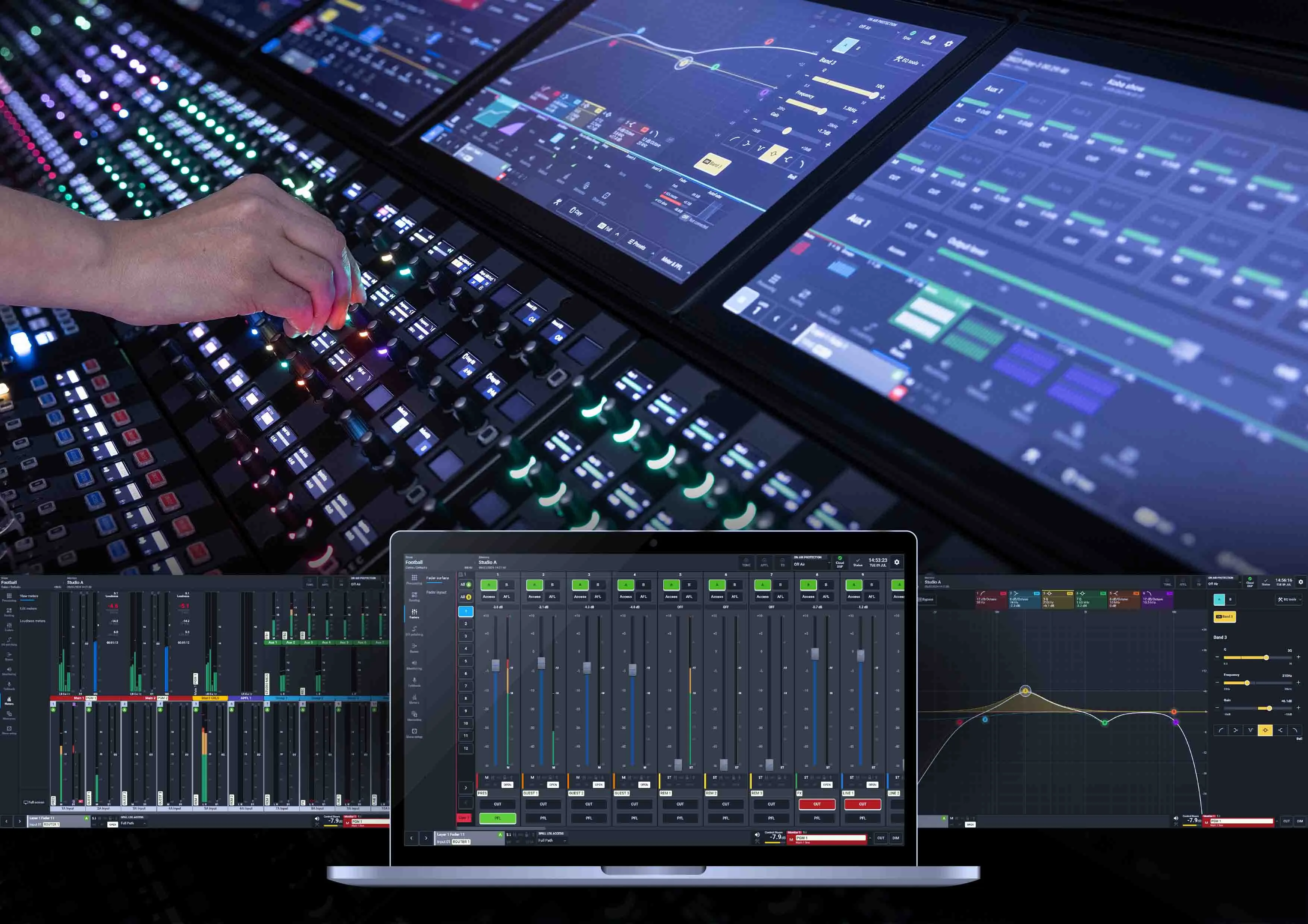
The Argo M surface, according to Envall, stands out due to its ability to provide audio engineers with the necessary control levels for complex live productions. "Physical faders, layout, and operational approach are very important for sports and fast-moving live events," he notes. Additionally, True Control 2.0 technology allows remote operation while maintaining a familiar and responsive workflow, making it practical for large-scale production environments. This means that DMC Production is not just installing new equipment but fundamentally changing how audio engineers operate in real-time.
Technical and Operational Implications of DMC Production's AR 1 and AR 2
The deployment of Calrec's ImPulseV Virtualised Audio Mixing Engine within the DMC Production's AR 1 and AR 2 units represents a significant shift in live production workflows. The use of Grass Valley AMPP alongside Calrec's technology enables a software-defined architecture that pushes the boundaries of traditional OB models. Each unit is equipped with a 48-fader Calrec Argo M console, which is crucial for managing complex live audio environments remotely. This setup allows DMC Production to handle large multi-camera productions over a lightweight 100 Mbit/s internet connection, significantly reducing bandwidth requirements while maintaining high-quality signal processing and audio mixing.
The integration of Calrec's Type R provides local monitor and in-ear mixing capabilities, ensuring integrated audio management at the venue. The True Control 2.0 feature allows for remote operation with a familiar interface, enabling audio engineers to manage the entire mix from DMC Production's broadcast centers. This setup is particularly beneficial for fast-paced live events such as sports broadcasts, where quick response and control are essential. DMC Production's Chief Innovation Officer, Jens Envall, emphasizes that this approach is not just about replacing traditional equipment but redefining how live productions can be executed more efficiently. The focus on flexibility and scalability ensures that the production model remains adaptable to changing market demands.

This deployment signals a significant shift towards more flexible and bandwidth-efficient production models within the broadcast and sports industry. By centralizing critical processing at the venue, DMC Production is setting a new standard for remote production that emphasizes efficiency and scalability. The next likely step will be expanding this concept to include additional vehicles and venues, potentially leading to an entire fleet of reverse remote production units.
With Calrec's ImPulseV and Grass Valley's AMPP working in tandem, the industry is poised to see more widespread adoption of cloud-native production environments. This approach enhances control and flexibility for audio engineers and producers. As DMC Production continues to refine its remote production model, we can expect to see similar systems deployed by other broadcasters seeking to meet the evolving demands of live content delivery.
For the upcoming quarter, investors and industry analysts should closely monitor DMC Production's progress with its reverse remote production model. Specifically, they will be watching for further deployment of AR 1 and AR 2 vehicles across various live events to assess bandwidth efficiency gains and scalability. Additionally, the integration of Calrec's ImPulseV AMPP platform is expected to provide insights into how integrated and low-latency audio control can be achieved in real-world scenarios. The company's continued focus on flexibility and remote operation will also be key, as it aims to deliver a practical live production environment that meets the diverse needs of its clients."Envall notes, "The aim is to prove this model works across multiple types of productions so we can scale it up effectively.""
News submitted by: Jump