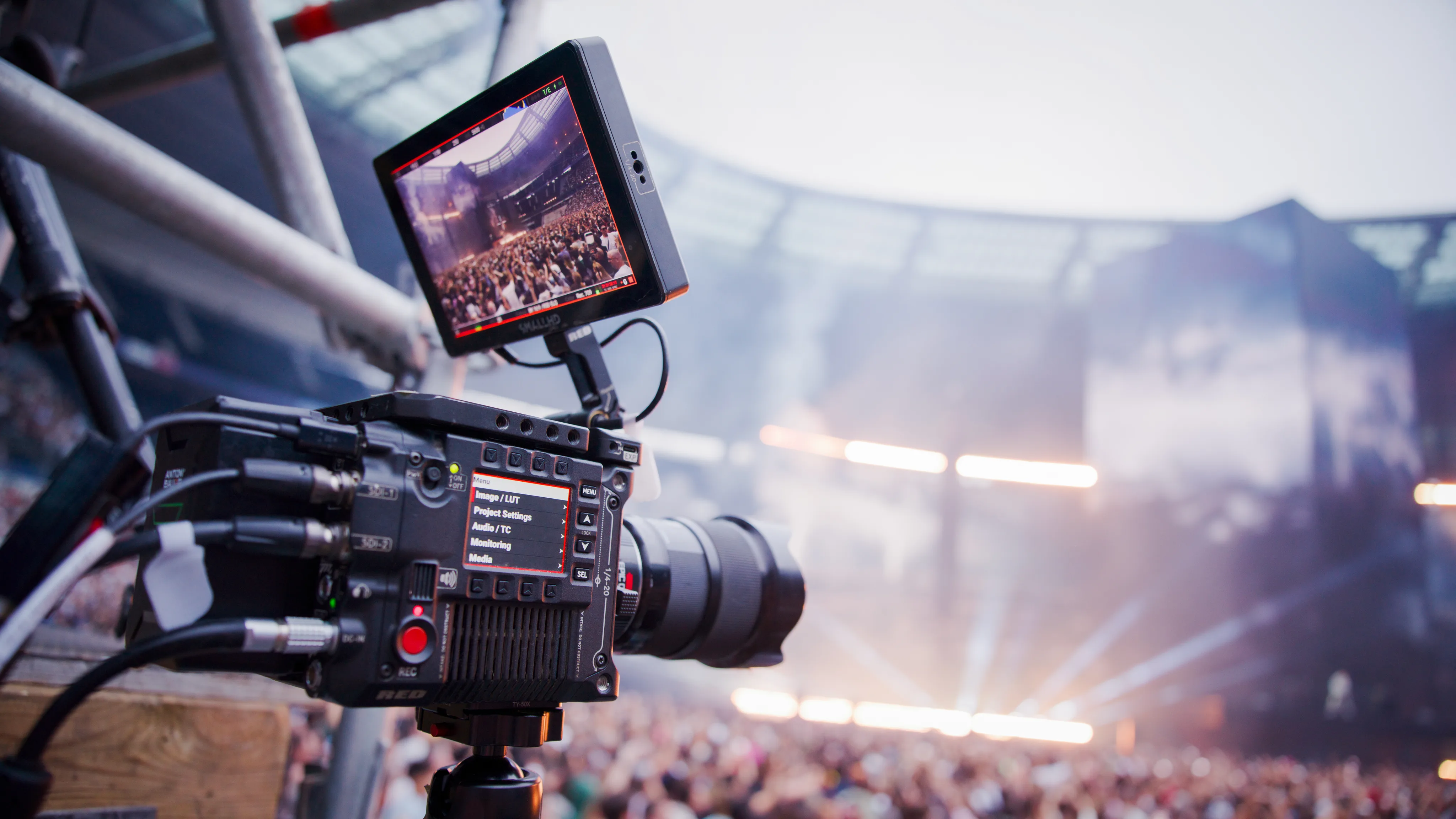
Three sold-out nights at Stade de France, more than 240,000 fans, and a stage built around a monolith concept left little room for a split personality between "cinema unit" and "IMAG truck." Epic Cinema and director Stijn Verlinde treated David Guetta's June 11-13 "Ultimate Monolith Show" in Saint-Denis as one capture problem: live projection and near-live highlights had to share the same camera language as the official aftermovie and an upcoming documentary. RED Digital Cinema supplied the glass and the live path - a 22-camera package built mostly on KOMODO-X and V-RAPTOR bodies, with V-RAPTOR XL [X] systems on RED's Cine-Broadcast live production chain.
Verlinde put the creative demand in exposure terms rather than marketing ones. Guetta's show energy and the LED-heavy monolith design needed cameras that could sit in the crowd, hold highlight detail on the stage LED, and still read as cinema when the same files hit post. "This was truly a career milestone for our team," Verlinde said. He described Guetta as one of the largest global touring acts and said the Monolith Show needed cameras with high dynamic range to shoot in the crowd and hold the LED stage without over- or underexposing, while still feeding live broadcast and cinematic capture from the same fleet.
Twenty-two cameras across stadium, stage, and booth
The physical layout mixed handheld and gimbal systems for crowd and stage movement, fixed stadium positions for wide and beauty frames, a Spidercam, and a telescopic jib. Dedicated RED Cine-Broadcast configurations carried Fujinon DUVO 25-1000mm PL-mount box lenses for long-range live stage coverage - the kind of reach stadium music shows need when the booth is a distant island in a sea of LED. Unmanned RED cameras on and around the DJ booth and stage architecture ran remote so the visual design of the monolith was not broken by operators in the shot.

Multiple feeds returned to the live production control room for real-time color match and switching to IMAG screens. That room had to keep a consistent look between what the audience saw on the house screens and what post would later cut for the aftermovie. Cine-Broadcast's role was the bridge: cinema-grade capture with real-time signal output so the switcher could treat RED sources as live paths while RAW remained available for offline. On-site highlight editing and rapid turnaround sat on the same aesthetic, which is the practical test of any "live cinema" claim - does the night-of cut still look like the camera package, or does it fall back to a different look board?
Why Cine-Broadcast mattered on this footprint
Stadium electronic shows punish two different camera cultures at once. Broadcast paths want low latency, reliable long-lens coverage, and switcher-friendly timing. Cinema paths want global shutter behavior, high dynamic range against LED walls, and files that survive grade. RED's Cine-Broadcast pitch on this job was that those were not separate fleets. Andy Newham, head of sales, EMEA at RED Digital Cinema, tied the result to image quality plus global shutter and low-latency output at show scale. "This event vividly demonstrated how RED's live cine-broadcast solution can truly capture the power of the emotional experience for the artists and the audience," Newham said. "The cinematic image quality of the RED camera, combined with the global shutter and low-latency output, is ideally suited to the rigorous technical demands of a show of this impressive scale. It was a privilege to support Stijn and Epic Cinema in delivering results that were cinematic, scalable and fully optimized for a live production."
For production managers pricing similar tours, the useful details are the mix, not the slogan: twenty-two cameras; KOMODO-X and V-RAPTOR as the bulk of the fleet; V-RAPTOR XL [X] on live Cine-Broadcast; Fujinon DUVO 25-1000mm on the long live paths; Spidercam and telescopic jib in the specialty set; remote unmanned heads on the booth architecture; control-room color match for IMAG; RAW retained for aftermovie and documentary. That is a concrete template for large electronic music stadium runs where the in-venue screen product and the long-form film product are sold as the same visual brand.
Guetta's monolith nights also underline a scheduling truth for multi-night stadiums. Three consecutive shows mean the camera plan has to survive repetition - same LED show, same booth geometry, same long-lens sightlines - while still feeding fresh near-live content each night. A single-system approach reduces the overnight tax of reconciling two color pipelines. Whether every tour needs a 22-camera RED wall is a budget question; whether live IMAG and cinematic deliverables should share one exposure language is increasingly not. Epic Cinema's answer in Saint-Denis was to put both jobs on the same RED fleet and let Cine-Broadcast carry the live half without abandoning the files post would need after the house lights came up.
Operational notes from the three-night run also matter for crews who only see the highlight reel. Remote unmanned heads on the booth architecture meant the live gallery had to treat those angles as always-hot sources during Guetta\'s set changes, not as documentary B-roll to be discovered in offline. The Fujinon DUVO 25-1000mm paths on Cine-Broadcast kept long-stage coverage on the same color conversation as the KOMODO-X and V-RAPTOR handhelds in the pit. When IMAG and aftermovie share one fleet, the night-of switcher decision and the week-later grade start from the same exposure language - which is the actual production reason Epic Cinema put both jobs on RED in Saint-Denis rather than splitting cinema and broadcast into two camera cultures that never quite match on the LED wall.
News submitted by: Spencer Anopol